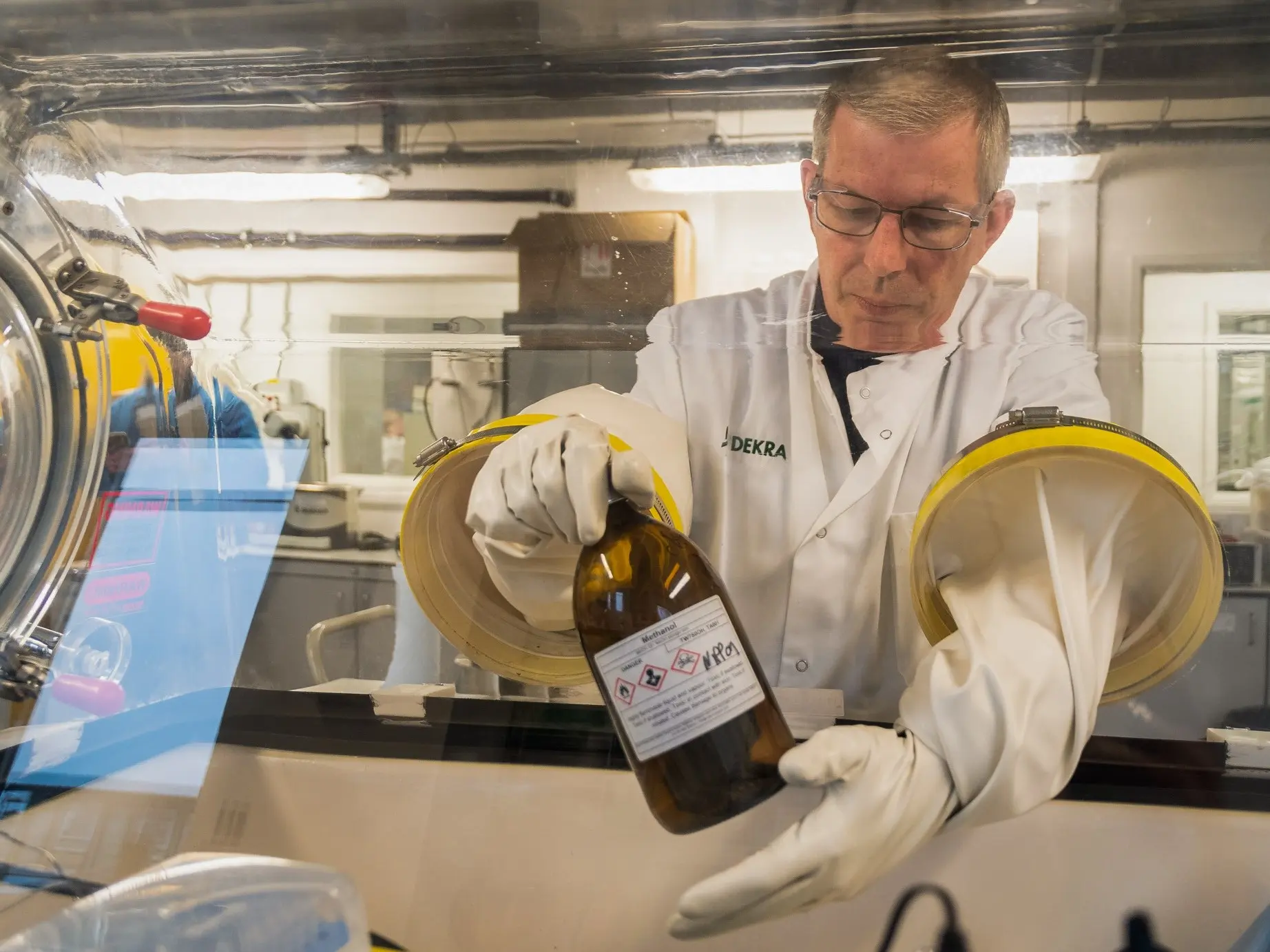
Corrosion is a problem that impacts multiple aspects of industry including resolving process problems; aiding in the material selection of equipment and storage containers (material of construction compatibility with chemicals); and to satisfy Department of Transportation (DOT), UN Globally Harmonized System (GHS), and other international shipping requirements.
Corrosive substances can present significant challenges in multiple aspects of industry, from process issues to material selection for proper equipment and storage containers based on chemical compatibility. If not identified and handled properly, corrosives may result in severe harm to employees, equipment failure, or product loss.
Understanding the corrosive potential of a substance is also critical for meeting regulatory requirements, particularly those governing domestic and international shipping standards and hazard communication such as the Department of Transportation (DOT), the UN Globally Harmonized System (GHS), and the UN Recommendations on the Transport of Dangerous Goods, among others.
It is therefore essential to understand the corrosive properties of a substance to ensure safe operations and compliant domestic and international shipping practices.
DEKRA offers standardized and customized corrosion testing services that are:
- Fast, Accurate & Reproducible
- Meets standardized corrosion testing methods as prescribed by US-DOT, EPA, and other regulatory agencies
- Can be customized to address your unique needs
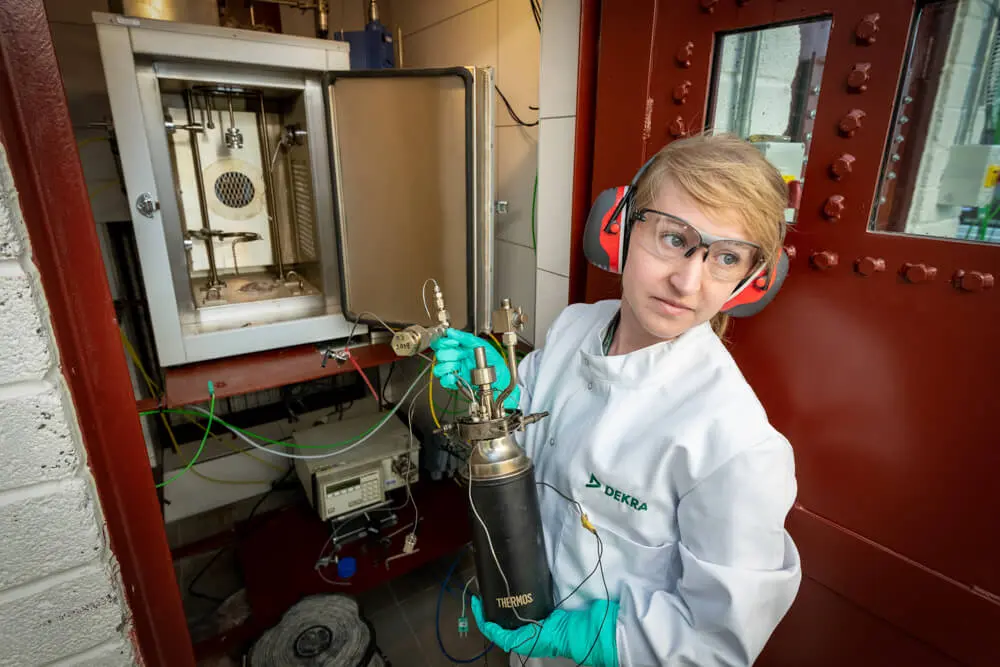
DEKRA has the expertise, facilities, and equipment for corrosion testing under both ambient and high-temperature conditions.
We Offer Standardized Test Methods:
- Corrositex Skin Corrosion Testing for Packing Group Assessment (UN GHS, US DOT/EPA, and OECD ): OECD Test 435 uses a simulated skin barrier in place of animal testing to assess whether a substance meets the criteria for a Class 8 corrosive (Packing Group I or II) and to determine the GHS skin corrosion subcategory (1A, 1B, or 1C).
- UN/DOT Test C.1 for Corrosive Properties: This is the method used to determine if a substance, intended for transport, is corrosive to metals as required by 49 CFR 173.137 (DOT) and UN section 37 requirements.
- ASTM G31, Immersion Corrosion for Metals: This highly flexible corrosion standard provides guidance on how to quantitatively measure a material’s compatibility with a given liquid or solid. The test allows for control of temperature, solution, material, duration, immersion vs head space, etc. A robust methodology to validate process design, material compatibility, and inhibitor performance.
Got a Unique Problem? Let Us Be Your Trusted Advisor!
DEKRA has decades of experience testing and classifying materials for all kinds of industries. We want to understand your problem and be a partner that will work alongside of you to select the right testing strategy that fits your needs. We have customized small and large-scale corrosion testing labs and facilities that we can leverage to solve your problem.