Get the Critical Data You Need to Design Safer, Smarter Chemical Processes
Understanding how chemicals behave under process conditions is essential to preventing thermal runaways, pressure buildups, and catastrophic incidents. DEKRA’s chemical reaction hazard assessment services deliver the data and insight you need to evaluate risks, comply with safety regulations, and optimize chemical processing operations.
We combine rigorous laboratory testing, advanced calorimetry, and expert analysis to help you detect potential hazards early and make informed decisions about process safety.
Why Chemical Reaction Hazard Testing Matters
Many exothermic reactions, both intentional and unintended, can lead to unsafe pressure or heat accumulation if not properly understood.
Whether you’re scaling up a batch process, evaluating changes, or meeting regulatory requirements, you need a reliable assessment to:
Identify thermal and pressure hazards
Understand runaway potential
Comply with OSHA, EPA, and DIERS guidance
Design effective emergency relief systems
Protect facilities, workers, and surrounding communities
Meet the Scientists Behind the Results
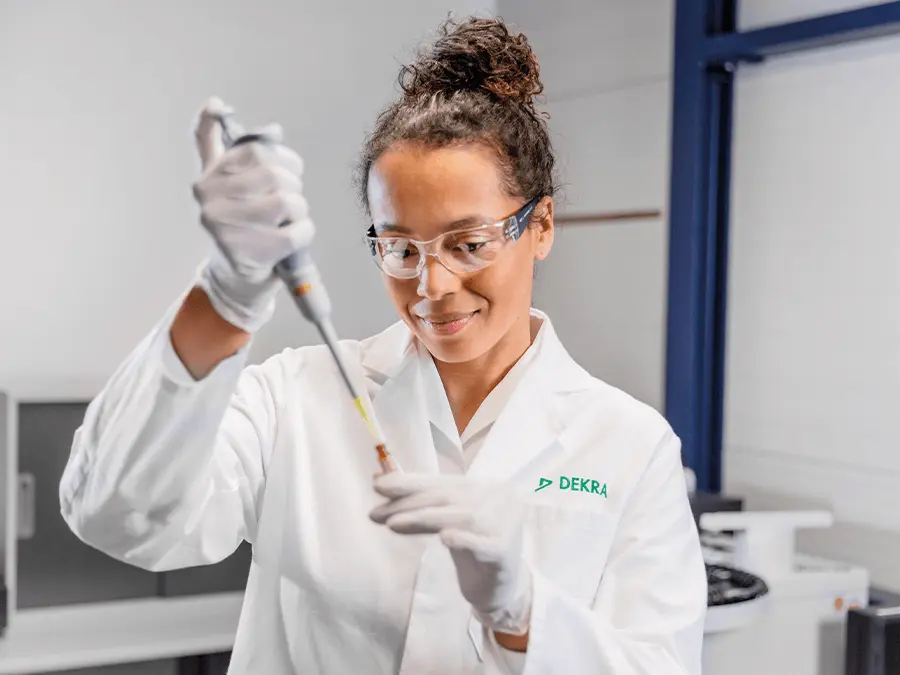
Go beyond the numbers. Meet the DEKRA scientists who turn test results into insights that help clients make informed process safety decisions.
See Process Safety Testing in Action
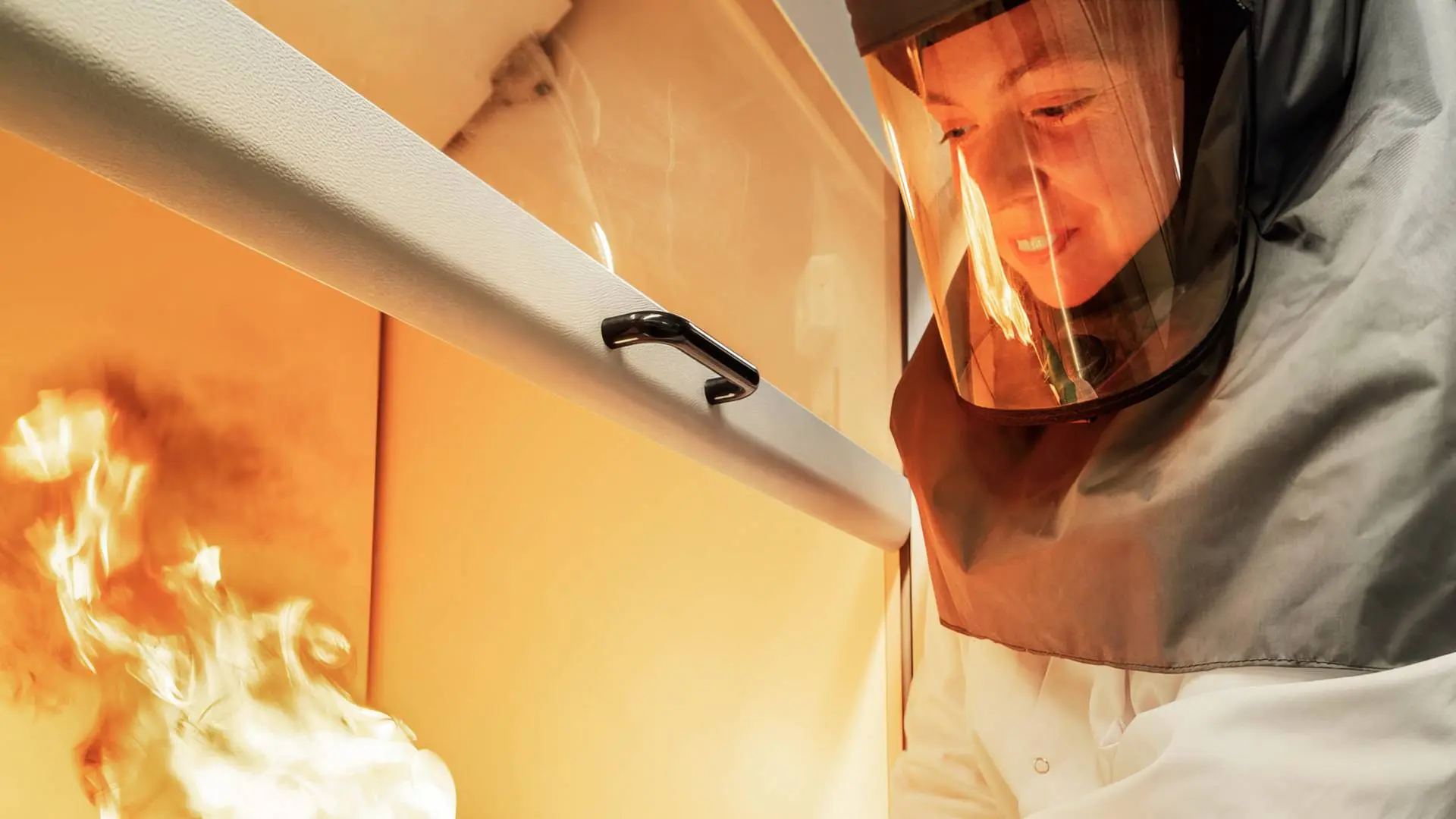
Step inside DEKRA’s Princeton laboratory and see how our scientists test materials, uncover process risks, and turn results into actionable safety insights.
Our specialists begin with a technical process review, then select and conduct lab-based studies to model real-world scenarios and hazards. Testing methods include:
Screening Evaluation: The CHETAH program (The ASTM program for Chemical Thermodynamic and Energy Release Evaluation) predicts both thermochemical properties and certain “reactive chemical hazards”. CHETAH is useful for classifying materials decomposition energies, estimating heats of reaction, and for predicting lower flammable limits.
Differential Scanning Calorimetry (DSC): DSC is a method for thermal analysis using very small samples, and is especially useful for highly energetic or unknown processes. In addition, the duration of an experiment in the scanning mode is only several hours, making the DSC technique a very rapid and powerful method for screening purposes quantitatively.
Accelerating Rate Calorimeter (ARC): The ARC is used to determine the time, temperature, and pressure relationships of any exothermal reaction in a confined adiabatic environment. This data can be applied to the evaluation of thermal and pressure hazard potentials and used for specifying plant protection measures including emergency relief system designs using DIERS technology.
Reaction Calorimetry (Mettler RC1): The RC1 balances heat and mass flows to provide reaction data such as energy of reaction, specific heats, adiabatic temperature rises and heat transfer coefficients. RC1 data can be used for process development and optimization by studying the relationships of changing process parameters, including temperature, dosing, stirring, concentration and catalyst.
Calvet Differential Scanning Calorimeter (Calvet DSC): This tool provides similar runaway onset detection as the ARC while also having the ability to simulate process conditions like the RC1, using a smaller sample. Calvet DSC offers low temperature scanning capabilities and low heat flow detection.
Vent Sizing Package 2 (VSP2™): The Vent Sizing Package generates data for vent sizing calculations on high pressure and temperature runaway exothermic reactions and decomposition. The data can be used for specifying plant protection measures including emergency relief system designs using DIERS technology.
Gas Chromatography-Mass Spectrometry (GC-Mass Spec, GC-MS): This special equipment generates information on the products and byproducts that are released during the reactions. When taken with the reaction data, it provides a complete view of the hazards associated with the reaction.
Why DEKRA?
Decades of global process safety experience
ISO/IEC 17025-accredited laboratories
Advanced instrumentation and testing protocols
DIERS-aligned methodologies
Custom guidance from experts who understand your industry
Whether you're investigating a near-miss, preparing for scale-up, or ensuring safe design, DEKRA delivers insights you can trust.
Start Your Chemical Reaction Hazard Assessment
Prevent the preventable. Get the data you need to design safer processes and eliminate costly surprises.
Frequently Asked Questions (FAQs) About Chemical Reaction Hazard Testing
Chemical reaction hazard testing evaluates how chemicals and reaction mixtures behave under defined process conditions. It can identify potential thermal, pressure, and reactivity hazards, providing data that supports safer process design, operation, and risk management.
Chemical reactions can generate heat, pressure, gases, or hazardous byproducts. Reactive chemical testing helps organizations identify these potential hazards before process scale up, operational changes, or commercial production, reducing the risk of thermal runaway, overpressure, and other dangerous events.
A chemical reaction hazard assessment is often performed during process development, scale up, formulation changes, incident investigations, and regulatory reviews. It may also be appropriate when introducing new chemicals, equipment, operating conditions, or reaction pathways.
Reaction hazard testing can help identify thermal instability, runaway reaction potential, pressure generation, decomposition reactions, gas evolution, and hazardous interactions between materials. These findings can support informed chemical process safety testing and risk management decisions.
Chemical reaction hazard testing is widely used by chemical manufacturers, pharmaceutical companies, specialty chemical producers, petrochemical facilities, and organizations involved in chemical process development. Any operation that handles reactive materials or performs chemical reactions may benefit from appropriate process safety testing.
Reaction calorimetry testing measures heat generation and heat removal requirements during a chemical reaction. The resulting data can support process development, optimization, scale up, thermal hazard testing, equipment selection, and risk evaluation.
As a process moves from the laboratory to production scale, heat removal, mixing, pressure, and reaction behavior can change significantly. Chemical reaction hazard testing helps organizations understand these characteristics and identify potential risks before larger scale operations begin.
After testing, organizations receive technical data and analysis that can support a chemical reaction hazard assessment, process design decisions, operating procedures, emergency relief design, and risk reduction initiatives. Qualified specialists can help interpret the results within the context of the actual process.
An independent laboratory provides specialized equipment, recognized testing methods, process safety expertise, and objective data. These capabilities can help organizations better understand chemical reaction risks and make informed decisions about process design, scale up, and safe operation.