
Automotive EMC Testing and Compliance Services
Modern vehicle programs depend on reliable electronics operating in increasingly complex electromagnetic environments. High-voltage power electronics, ECUs, sensors, vehicle networks, wireless systems, and ADAS technologies must coexist without creating unacceptable interference or losing required functionality.
DEKRA provides independent automotive EMC testing and technical compliance support for OEMs and Tier suppliers from our Automotive Test Center of Excellence in Plymouth, Michigan.
Our automotive EMC capabilities support programs including Ford FMC1278, GM GMW3097, CISPR 25, the ISO 11452 series, ISO 7637, ISO 10605, and ECE R10, with testing performed within our applicable ISO/IEC 17025-accredited scope.
From early development and troubleshooting through formal validation, our goal is straightforward: define the right test program, execute it correctly, and provide results your engineering and quality teams can use.
What is EMC in Automotive?
Electromagnetic compatibility, or EMC, is the ability of electrical and electronic equipment to operate as intended within its electromagnetic environment without creating unacceptable interference for other equipment.
Automotive EMC testing focuses on two fundamental areas:
Emissions: Measures electromagnetic disturbances generated by a component, subsystem, or vehicle. Testing may evaluate energy radiated through the air or conducted along power and signal lines.
Immunity: Evaluates whether a device continues to meet its required functional performance while exposed to electromagnetic disturbances such as RF fields, disturbances coupled onto the wiring harness, electrical transients, or electrostatic discharge.
Why Automotive EMC Testing Matters
Automotive EMC is more than a laboratory requirement. It can directly affect product validation, OEM acceptance, regulatory approval, and ultimately a vehicle program’s launch schedule.
Electronic modules, sensors, communication networks, power electronics, and wireless systems operate in close proximity. EMC problems can appear as degraded radio reception, communication errors, unexpected module behavior, sensor disturbances, or other functional anomalies.
Finding those problems during development may mean changing a filter, grounding point, shield termination, harness configuration, PCB layout, or enclosure detail.
Finding them late in formal validation can mean lost chamber time, redesign, retesting, and a delayed program.
A well-defined test plan and an experienced laboratory help reduce that risk.
Comprehensive Automotive EMC Testing Capabilities
DEKRA supports automotive EMC programs across international standards, regulatory requirements, and OEM-specific specifications.
Radiated and Conducted Emissions Testing
We measure electromagnetic disturbances generated by the device under test and compare them with the applicable limits and test requirements.
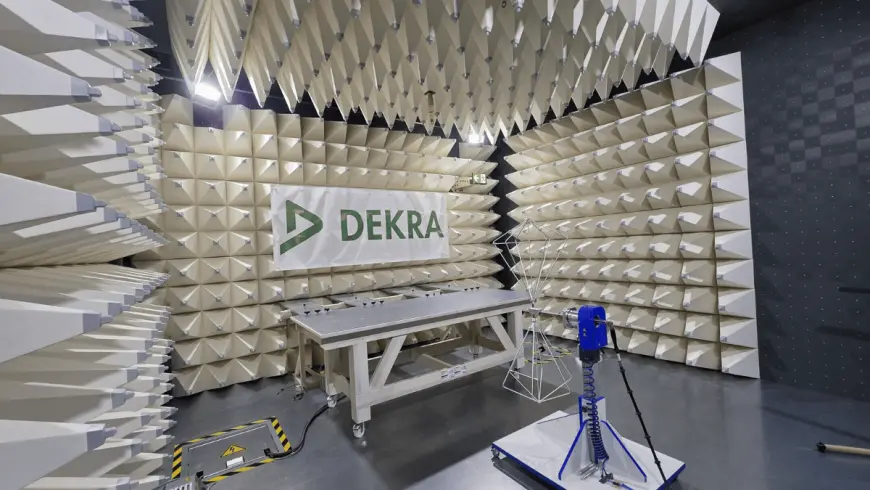
Evaluates disturbances radiated from the DUT, wiring harness, and associated test setup.
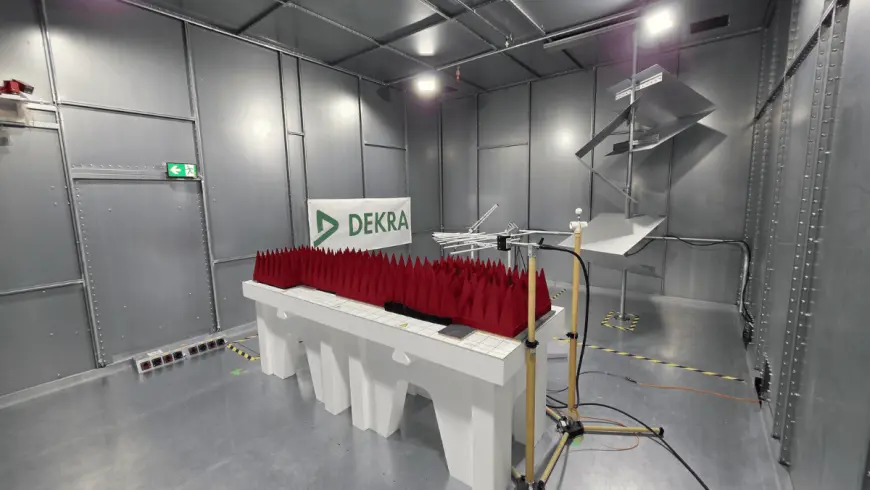
Measures disturbances present on vehicle power or signal lines using the methods required by the applicable standard or OEM specification.
We evaluate DUT performance while applying controlled electromagnetic disturbances.
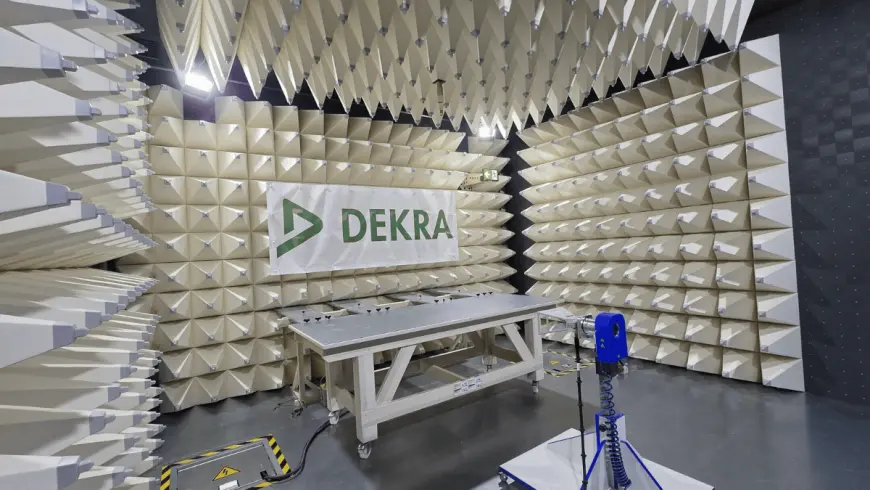
Includes methods such as absorber-lined shielded enclosure testing, reverberation chamber testing, and portable-transmitter methods where required by the applicable specification.
Includes methods such as bulk current injection and other specification-defined techniques for coupling RF energy onto the vehicle wiring harness.

Electrical Transient and ESD Testing
Automotive electrical systems must also tolerate disturbances that occur through vehicle wiring and electrostatic discharge.
Testing may include supply- and signal-line transient immunity, transient emissions, load-dump-related requirements, and ESD evaluation in accordance with standards such as ISO 7637, ISO 10605, and applicable OEM-specific specifications.
EV and High-Voltage EMC Testing
Electrified vehicle architectures introduce additional EMC considerations because high-voltage power conversion, charging systems, and low-voltage vehicle electronics must operate together within the same platform.
Our automotive EMC work supports products such as:
- Inverters and DC-DC converters
- On-board chargers
- Battery and high-voltage systems
- ECUs and electronic modules
- Sensors and ADAS-related electronics
- Antennas and RF modules
High-voltage and low-voltage coupling, shielding and grounding, charging operation, harness configuration, and operating mode can all influence EMC performance and should be considered when the test program is developed.
Pre-Compliance and Diagnostic Testing
Not every chamber session needs to be a final validation test.
Development and pre-compliance testing can be used to characterize emissions, identify susceptibility, compare design revisions, or investigate a failure before the next formal test run.
Diagnostic work may include targeted measurements, near-field investigation, setup changes, and evaluation of grounding, shielding, filtering, harness configuration, or other potential coupling paths.
The objective is not simply to hand back a failing result. When development support is part of the requested scope, we can work with the customer to better understand what is happening and identify the most useful next step.
How an Automotive EMC Program Works with DEKRA
Good EMC testing starts before the chamber door closes.
Send us the applicable specification, customer test plan, or EMC RFI.
We review the DUT, sample count, required operating modes, power configuration, connectors and circuits, monitoring requirements, and applicable test methods.
Open questions are identified early rather than discovered during testing.
The requested scope is converted into a defined test program and estimate.
Where information is not yet available, assumptions are identified so the customer understands what the quotation is based on and what could change the final scope.
Before testing begins, we confirm the required setup, harness configuration, DUT operation, monitoring, performance criteria, and other program-specific requirements.
For OEM programs, applicable deviations, approvals, or customer-specific requirements should be resolved before they affect formal test data.
The program is executed against the approved requirements, with results documented in the final report.
If an unexpected result or failure occurs, development and diagnostic support can be incorporated when appropriate rather than allowing uncertainty to consume the next scheduled test window.
Common automotive EMC standards include:
OEM-Specific EMC Requirements
For many automotive suppliers, passing the OEM specification is just as important as understanding the underlying international standard.
DEKRA Plymouth supports OEM automotive EMC programs including:
Ford FMC1278
Ford component-level EMC requirements.
Ford component-level EMC requirements.
GM GMW3097
General Motors component-level EMC requirements.
General Motors component-level EMC requirements.
OEM specifications may build upon CISPR or ISO methods while adding their own limits, severity levels, operating modes, functional-performance criteria, test setups, documentation requirements, and approval processes.
Our team works with customers to review those requirements before testing begins so the laboratory setup reflects the actual vehicle program rather than a generic interpretation of the underlying standard.
DEKRA Plymouth supports automotive EMC testing including Ford FMC1278 and GM GMW3097 programs and operates within an ISO/IEC 17025-accredited laboratory scope.
OEM approval, witness, documentation, or other program-specific requirements can vary, so any additional acceptance requirements should be confirmed during test planning.
OEM approval, witness, documentation, or other program-specific requirements can vary, so any additional acceptance requirements should be confirmed during test planning.
Yes.
We can develop a quotation from the requested scope while clearly identifying assumptions or unresolved items.
Formal validation claims remain limited to testing performed against the requirements and approvals applicable to the final program.
Formal validation claims remain limited to testing performed against the requirements and approvals applicable to the final program.
The most useful information includes:
• Applicable specification or customer test plan
• DUT description
• Number of samples
• Required operating modes
• Power configuration
• Connector and circuit information
• Harness configuration
• Monitoring requirements
• Required test methods
• Whether the work is development, pre-compliance, or formal validation
• DUT description
• Number of samples
• Required operating modes
• Power configuration
• Connector and circuit information
• Harness configuration
• Monitoring requirements
• Required test methods
• Whether the work is development, pre-compliance, or formal validation
The more clearly these items are defined, the more accurately chamber time and total project scope can be estimated.
A failure does not necessarily need to end with a test report and another future chamber booking.
When diagnostic support is included or added to the program, our team can help investigate the failure, evaluate potential coupling paths, and determine what additional measurements or design changes may provide useful information before retesting.
No.
EMC describes electromagnetic compatibility as a technical characteristic and, where applicable, a compliance requirement.
CE marking is a broader European conformity marking used for products subject to applicable EU legislation. Automotive vehicles and electrical/electronic subassemblies may instead be subject to automotive-specific approval requirements such as UN Regulation No. 10.
The correct compliance path depends on the product, its intended use, and the markets in which it will be placed.
There is no single “EV EMC standard.”
Depending on the product and application, an EV program may involve CISPR 25, the ISO 11452 series, ISO 7637, ISO 10605, ECE R10, OEM-specific EMC requirements, and additional requirements associated with charging operation.
The correct test program depends on the component, vehicle architecture, operating modes, customer requirements, and target market.
Partner with an Automotive EMC Team That Understands the Program
Reliable automotive EMC testing requires more than chamber time.
The laboratory needs to understand the specification, DUT operating modes, setup, monitoring, performance criteria, OEM expectations, and what the resulting data will be used to demonstrate.
DEKRA’s Plymouth automotive team supports customers from early development and troubleshooting through formal validation, combining independent testing with practical engineering support and OEM-specific experience.
Ready to start a program? Send us your EMC test plan, specification, or completed RFI. We can review the scope, identify open technical questions, and develop an appropriate test approach and quotation.